Supporting colleagues during Ramadan is a good example of this. It doesn’t require sweeping changes or complicated policies - just awareness, empathy, and a willingness to be flexible where it genuinely helps.
Ramadan is a holy month observed by Muslims around the world. It involves fasting from dawn until sunset, alongside prayer, reflection, and community. In 2026, Ramadan is expected to fall around mid-February to mid-March, depending on the sighting of the moon.
For employees observing Ramadan, this can have a real impact on their working day:
● No food or drink during daylight hours
● Earlier starts and later evenings due to pre-dawn meals and evening prayers
● Changes in energy levels, particularly in the afternoon
● A stronger focus on prayer and reflection
None of this means people are less committed to their work. Quite the opposite. But it does mean the workplace needs to be supportive and thoughtful.
The most important thing to say upfront is this: everyone experiences Ramadan differently. Some people will want adjustments; others won’t. Some may prefer to talk about it openly; others may not.
The best starting point is simply to:
● Acknowledge that Ramadan is taking place
● Let people know support is available
● Avoid making assumptions about what individuals need
A quiet “If there’s anything we can do to support you over the next few weeks, just let us know” goes a long way.
Flexible hours can be particularly helpful during Ramadan. Some colleagues may prefer to:
Start earlier and finish earlier
Work more flexibly around prayer times
Adjust workloads slightly to match energy levels
This doesn’t have to mean formal changes for everyone. Small, temporary adjustments can make a big difference.
Meetings: timing matters
Where possible:
Avoid scheduling long or intensive meetings late in the afternoon
Avoid scheduling meetings over lunchtime, especially those where people are likely to eat during the call
Check prayer times to ensure meetings are not scheduled at the same time. Dhuhr and Asr usually fall early and mid-to-late afternoon respectively
If you’re planning team sessions, training, or workshops, it’s worth checking dates and times in advance.
Working from home
For some people, working from home during Ramadan helps:
Reduce commuting fatigue
Allow more privacy around fasting or prayer
Create a calmer environment late in the day
Technology plays a role here - secure remote access, collaboration tools, and flexible meeting options make this easier without compromising productivity.
Office life can be unintentionally difficult during Ramadan:
Strong food smells during the day can be tough for those fasting
Social lunches are part of office life, but during Ramadan it’s worth being mindful so they don’t unintentionally exclude colleagues who are fasting
You don’t need to stop normal activity, but a bit of awareness helps.
Many Muslims pray five times a day throughout the year. During Ramadan, prayer may shape daily routines more noticeably, which can affect working patterns. If possible, providing access to a quiet room for prayer - even temporarily - is a meaningful gesture. It doesn’t need to be formal or permanent; just somewhere clean, quiet, and private.
Some employees may want to take time off during Ramadan or at the end of it for Eid al-Fitr, the celebration that marks the end of the month. As key dates depend on the lunar cycle, being flexible with annual leave requests around this time is another simple way to show support.
A few things that help colleagues observing Ramadan feel respected:
Employees who are not observing Ramadan don’t need to avoid eating or drinking - just be considerate
You don’t need to tiptoe around the subject - respectful curiosity is usually welcome
Don’t assume someone will want special treatment - let them lead, and if you’re not sure, it’s always okay to ask politely.
Eid officially begins at sunset on the night of the first sighting of the crescent moon. Many Muslims will take time off for the first three days of Shawwal, the 10th month of the lunar Islamic calendar, but not everyone. Eid is a joyful time, and acknowledging it in the workplace can be really meaningful. That might be as simple as:
A message recognising Eid and wishing colleagues well. “Eid Mubarak” is a common greeting
Allowing flexibility for celebrations with family
Sharing information so colleagues understand what Eid represents
Providing snacks like samosas and bhajis; or sharing sweet treats such as baklava, dates or other traditional Eid desserts
If food is involved, it’s worth remembering that Muslim communities span many cultures and traditions, and celebrations can look very different. Inclusivity is about recognition. Take the time to understand your colleagues and how they choose to observe and celebrate.
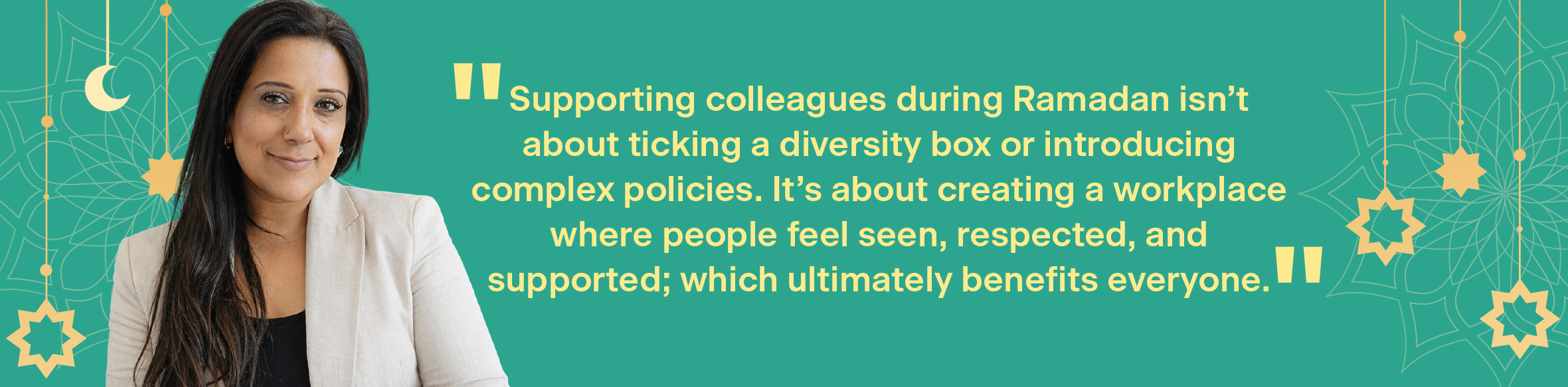
Supporting colleagues during Ramadan isn’t about ticking a diversity box or introducing complex policies. It’s about creating a workplace where people feel seen, respected, and supported; which ultimately benefits everyone.
At TIEVA, our own diverse team has shown us that small, thoughtful adjustments often have the biggest impact. And while technology enables flexibility, it’s empathy and understanding that make it work.
If you’re thinking about how to support your people better - during Ramadan or at any other time of year - it’s worth remembering that a modern workplace isn’t just powered by IT. It’s shaped by how we treat each other

Zeena Akram
Zeena is an IT Solutions Account Manager at TIEVA, partnering with public sector organisations to deliver trusted technology solutions that drive meaningful impact. She builds strong, lasting relationships by aligning IT strategy with her customers’ operational goals and long-term vision. Passionate about inclusion and cultural awareness, Zeena believes diverse backgrounds and traditions help create more supportive, respectful, and connected teams.